
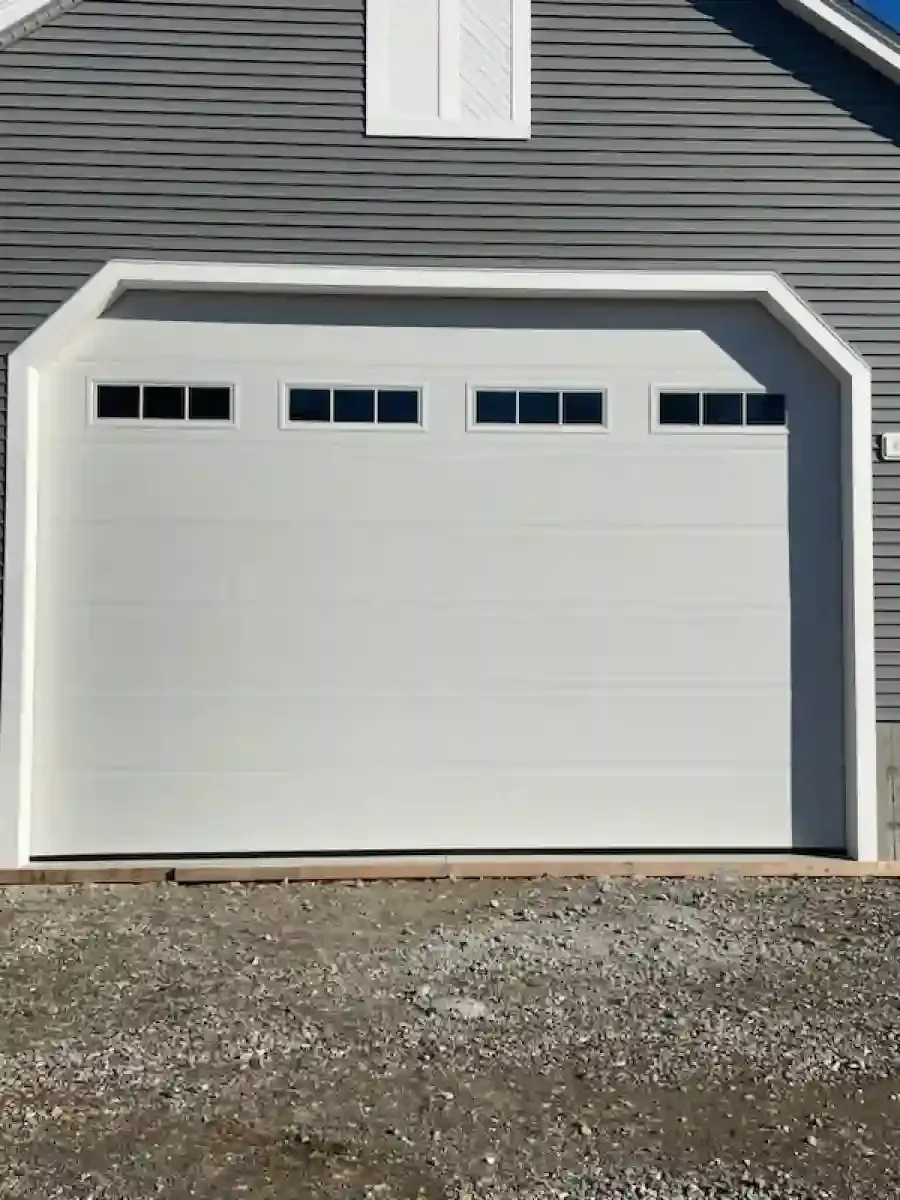
Panels Built for Freeze-Thaw Cycles
Sectional door installation in Taunton for commercial and residential properties facing New England's thermal expansion stress
Sectional doors in Whittenton and Norton experience panel racking and hinge failure within two winters when section joint alignment isn't handled correctly during installation—New England's freeze-thaw cycles create repeated thermal expansion and contraction that stress every connection point. Next Generation Doors & Construction installs sectional doors for both commercial and residential properties across Taunton and the South Shore, with installation protocols that prevent the premature hinge failures common to installations that follow only manufacturer baseline specs. Section joint alignment determines whether panels move as a single unit or rack against each other under seasonal temperature swings, and that alignment must be set before the first winter cycle.
The installation process involves hanging each panel section in sequence, aligning the joints so that hinges bear weight evenly across both sides, and adjusting roller tension to prevent lateral drift as the door travels the track curve. Panel racking occurs when one side of a section moves faster than the other during operation—this creates a twisting force that hinges aren't designed to handle, and repeated cycles fatigue the hinge pin until it snaps. Precision installers verify alignment at each panel joint before moving to the next section, a step that generalists skip to save time.
Arrange an on-site consultation to evaluate your opening dimensions and discuss panel insulation options suited to your heating costs.
How Section Joint Alignment Addresses Hinge Failure
When section joints are aligned correctly, each hinge pin carries its designed load without side forces that accelerate wear. The door operates without diagonal stress lines visible across the panel faces, and hinges don't develop the vertical play that signals impending failure. Thermal expansion factors must be accounted for during installation—steel panels expand in summer heat and contract in winter cold, and if the sections are forced into alignment only at installation temperature, they'll rack as soon as the season changes.
After installation, you'll notice the door travels smoothly through the curved track transition without hesitation, panels remain flush against each other when the door is closed, and there's no metal creaking during operation that indicates binding. Wayne Dalton sectional doors installed with New England-specific attention to thermal movement deliver longer hinge life and reduced maintenance intervals compared to doors installed to baseline specifications.
The service includes full panel installation, track mounting, spring system balancing, and bottom seal installation. It does not include structural modifications to the header or jamb unless the opening requires reinforcement to support the door weight. IDA certification ensures that every installation follows industry standards while incorporating the regional adjustments necessary for South Shore freeze-thaw conditions.
Common Questions About Sectional Door Installation
Property owners and facility managers throughout the South Shore ask similar questions when considering sectional door installation or replacement.
What causes sectional door hinges to fail in the first few years?
Hinge failure before the expected lifespan typically results from panel racking—when sections aren't aligned correctly during installation, thermal expansion creates side loads on the hinge pins that weren't part of the design load. Repeated stress cycles fatigue the metal until the pin shears or the hinge plate cracks.
How does insulation affect sectional door performance in New England winters?
Insulated panels reduce heat loss through the door and moderate the temperature differential between the interior and exterior panel faces, which reduces thermal expansion stress on the hinges and frame. Insulation also prevents condensation buildup on the interior face during cold weather, which would otherwise lead to rust formation on hardware.
What's the difference between residential and commercial sectional door installation?
Commercial installations require heavier-duty track systems and spring assemblies to handle higher cycle counts, while residential installations prioritize quieter operation and aesthetic panel options. Both require the same attention to section joint alignment to prevent racking, but commercial applications face accelerated wear if alignment isn't precise.
When should a sectional door be replaced instead of repaired?
Replacement becomes necessary when multiple panel sections show structural damage, the track system has deformed beyond adjustment capacity, or spring assemblies have exceeded their rated cycle count. Single-section damage can often be repaired without replacing the entire door if the frame and hardware remain sound.
How long does sectional door installation take for a residential garage?
Most single-car residential garage installations are completed within four to six hours, while two-car installations require a full working day. Commercial installations depend on door size and whether the facility can accommodate downtime during business hours or requires after-hours scheduling.
Next Generation Doors & Construction has installed sectional doors throughout Taunton and the South Shore for nearly two decades, with Wayne Dalton authorization and IDA certification ensuring that every installation addresses New England's thermal cycling demands. Schedule a property evaluation to determine whether your current door shows early signs of racking or hinge stress that will lead to failure within the next heating season.