
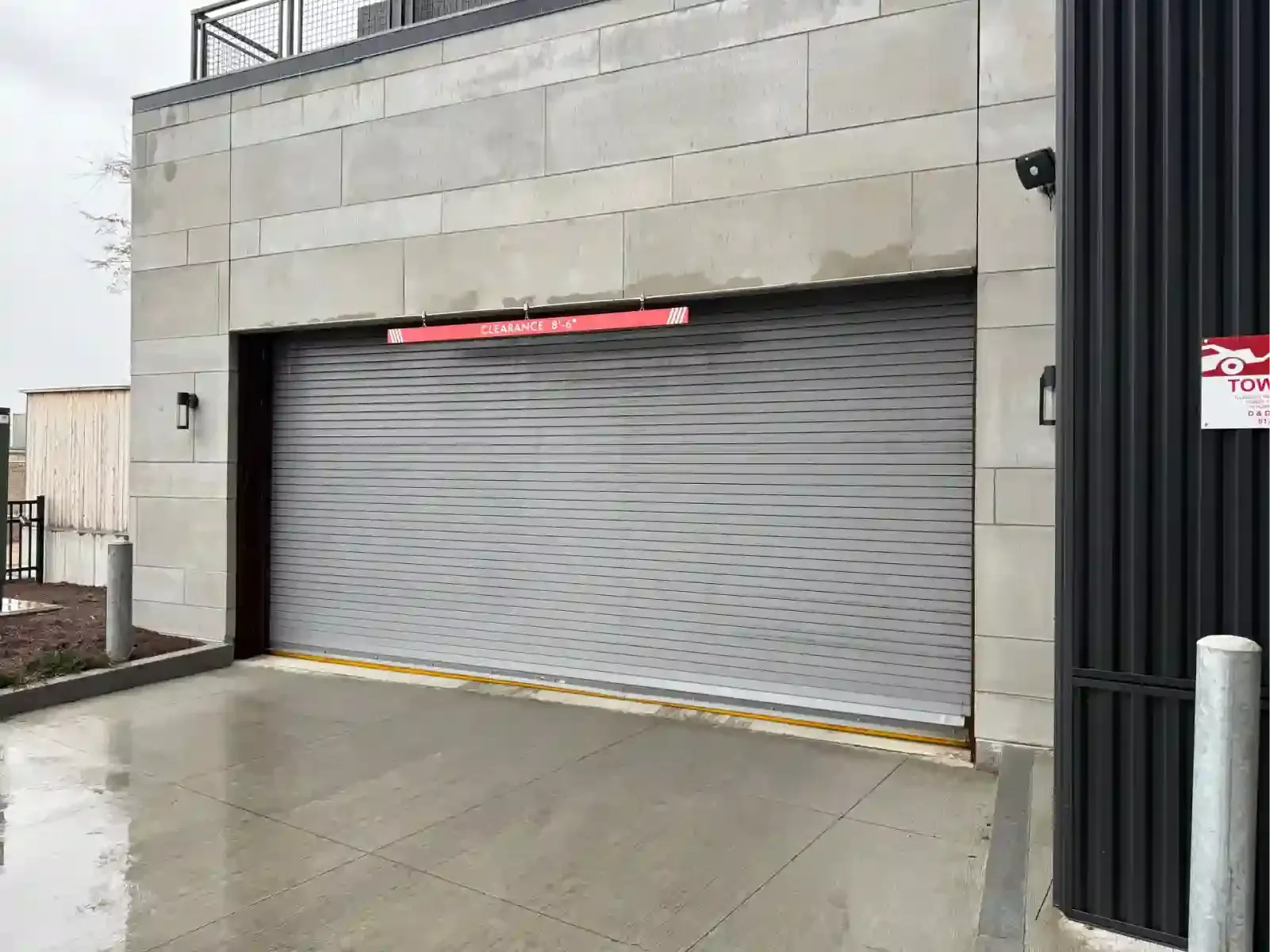
Doors That Cycle Through Coastal Conditions
Rolling steel door installation in Taunton for storage facilities, warehouses, and industrial properties facing salt air exposure
Storage facilities and warehouses along the South Shore operate in conditions that accelerate rolling steel door failure—coastal salt air corrodes coil housings and hardware faster than manufacturers anticipate in standard specifications. Next Generation Doors & Construction installs rolling steel doors for commercial and industrial properties across Taunton, Brockton, Bridgewater, Plymouth, Attleboro, and Fall River, with installation protocols that account for the corrosion-driven failures common to this region. When coil housing alignment is handled correctly during installation, the curtain tracks evenly through thousands of cycles without premature slat edge wear.
Rolling steel door installation determines whether the door operates reliably for a decade or requires coil replacement within five years. Coil housing alignment controls how the curtain moves through the guides—misalignment by even a quarter inch causes one edge of the slat to drag, wearing the steel and creating points where moisture penetrates. Self-storage facilities in Berkley and Dighton face this as a recurring problem when doors are installed to catalog specs without adjusting for salt air proximity.
Schedule an on-site evaluation to review your facility's exposure conditions and door cycle requirements.
What Proper Alignment Prevents Long-Term
The installation process involves mounting the coil housing level to the header, setting guide tracks plumb on both sides, and verifying that the curtain descends without lateral pull. When alignment is precise, the curtain rolls up and down without edge friction, and the bottom bar seals evenly across the threshold. South Shore conditions demand this level of precision—any friction point becomes a corrosion initiation site once salt residue settles into the wear groove.
After installation, you'll notice the door operates without metal-on-metal scraping sounds during descent, the bottom bar contacts the floor uniformly without gaps on one side, and the curtain retracts into the coil housing without bunching. Next Generation Doors & Construction applies Wayne Dalton product specifications adjusted for coastal New England applications, which means hardware selection accounts for accelerated corrosion rates, not just load ratings. This approach extends the interval before spring tension adjustments are needed and reduces the likelihood of slat replacement due to edge damage.
The service includes full coil housing installation, guide track mounting, curtain attachment, and operational testing under load. It does not include structural modifications to the header or jamb—those are assessed separately if the opening requires reinforcement. IDA certification and Wayne Dalton authorization mean the installation follows manufacturer standards while incorporating regional adaptations that general contractors typically overlook.
What Commercial Property Managers Ask
Property managers and facility operators often have similar concerns before committing to rolling steel door installation or replacement.
What causes a rolling steel door to bind halfway through its cycle?
Binding during operation typically results from coil housing misalignment or guide track installation that isn't plumb. When the curtain pulls to one side during descent, slat edges catch on the guide, and repeated cycles deform the steel enough to prevent smooth retraction.
How long does rolling steel door installation take for a warehouse bay?
Installation duration depends on header preparation and whether the opening requires guide track modifications, but most single-bay installations are completed within one working day. Multi-bay facilities require scheduling to avoid disrupting active loading operations.
What's the difference between a catalog install and a coastal-spec install?
Catalog installations follow manufacturer guidelines without regional adjustments, while coastal-spec installations account for salt air corrosion by selecting galvanized or coated hardware, verifying drainage paths in the coil housing, and ensuring no moisture traps exist where the curtain contacts the guides.
When should a rolling steel door be replaced instead of repaired?
Replacement becomes necessary when curtain slats show extensive corrosion perforations, coil springs have lost tension beyond adjustment capacity, or the coil housing structure has rusted through. Surface rust on slats can be addressed without full replacement if the structural integrity remains intact.
Next Generation Doors & Construction has provided commercial door installations across the South Shore for nearly two decades, with IDA certification and Wayne Dalton authorization ensuring that every rolling steel door installation meets both manufacturer standards and the demands of New England's coastal industrial environment. Request a facility assessment to determine whether your current doors are operating within safe parameters or require replacement before failure occurs during peak operations.