
Access Systems Commissioned for Safety Compliance
Gate operator installation in Taunton for commercial and industrial properties requiring high-cycle duty and full entrapment protection
Commercial properties along the Route 138 industrial belt and Britannia Village install gate operators expecting reliable access control, but many discover within the first winter that cold weather stresses motor housings and degrades loop detector performance—failures that result from installing to mechanical function without completing safety-critical commissioning steps. Next Generation Doors & Construction installs and programs gate operators for high-cycle commercial and industrial applications throughout Taunton and the South Shore, with commissioning protocols that include entrapment protection zone setup and loop detector calibration, not just mechanical installation and sign-off. When entrapment protection is configured correctly, the gate reverses on obstruction detection before applying enough force to cause injury, a safety standard that compliance-only installers often skip after the initial inspection.
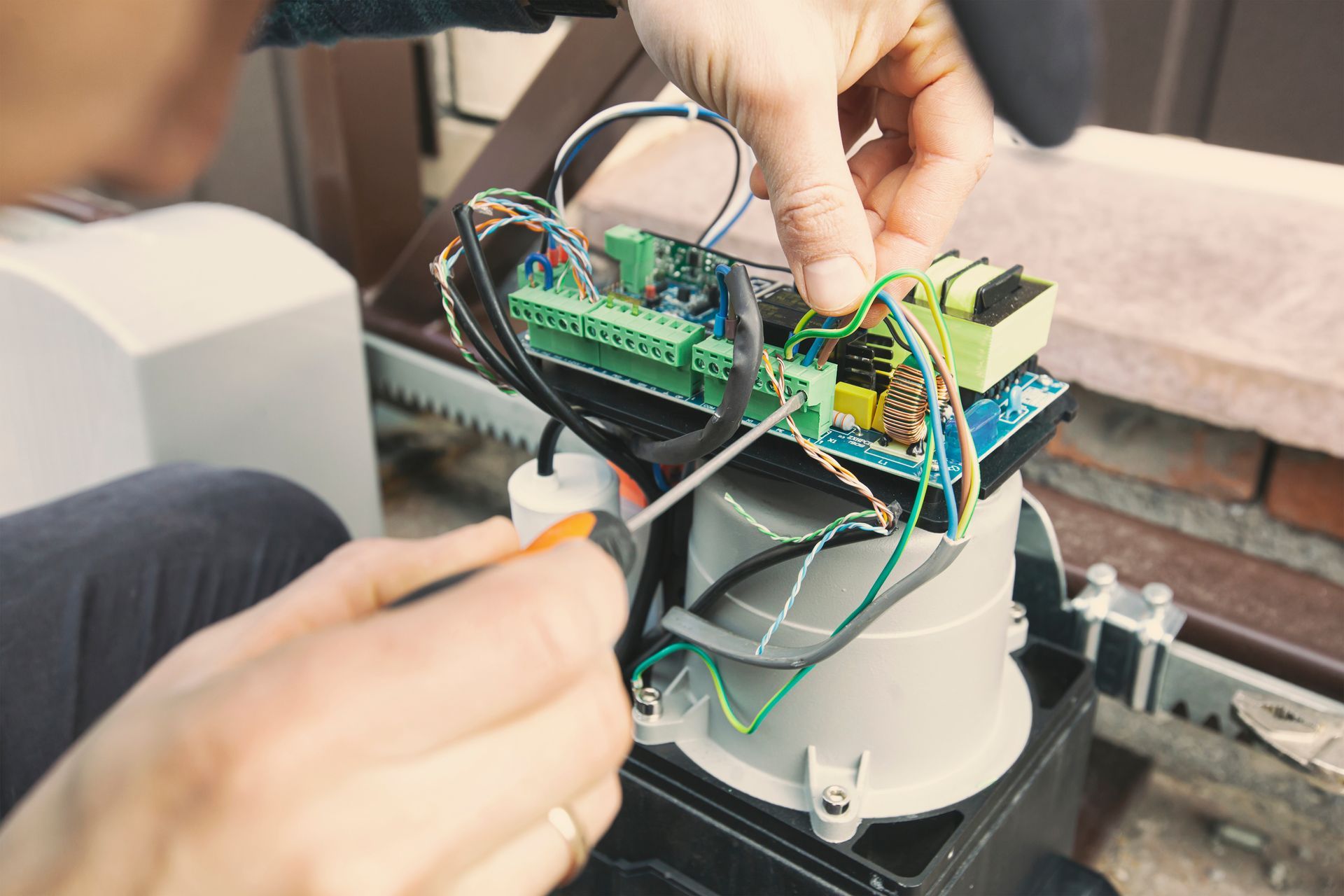
Gate operator installation involves mounting the motor assembly to the gate frame or support column, running power and control wiring to the operator housing, installing loop detectors in the pavement at entry and exit zones, and programming the control board for cycle timing and obstruction response. The mechanical portion of this work is straightforward, but the safety commissioning is where most installations fall short—entrapment protection zones must be tested under load to verify that the gate reverses within the required response time, and loop detectors must be calibrated to detect vehicles without triggering false reversals from adjacent traffic or metal objects outside the detection zone.
Schedule an on-site evaluation to review your access control requirements and discuss operator specifications suited to your daily cycle count.
What Proper Commissioning Accomplishes
The commissioning process includes setting force limits on the gate arm so that obstructions trigger reversal before injury-level force is applied, positioning loop detectors to cover the full vehicle detection zone without overlap into adjacent lanes, and programming delay timings so that the gate remains open long enough for vehicle clearance without staying open unnecessarily. Freeze-thaw conditions stress motor housings by contracting seals and allowing moisture infiltration, and loop detector sensitivity degrades when pavement cracks allow water to reach the wire loops embedded in the asphalt.
After commissioning, the gate responds immediately to loop detector activation without delays that frustrate drivers, reverses within two seconds if an obstruction is detected during closing, and operates consistently regardless of ambient temperature. Next Generation Doors & Construction applies IDA-certified installation standards with attention to the safety systems that protect against liability—not just the mechanical operation that satisfies initial inspection.
The service includes motor assembly installation, control wiring, loop detector installation and calibration, and full safety system commissioning. It does not include pavement cutting or repair for loop detector trenches, which is coordinated with paving contractors if required. Emergency response is available around the clock if an operator fails and a gate is stuck in the closed position, blocking access to a facility during operating hours.
Questions Before Installing Gate Operators
Property managers and facility operators across the South Shore typically ask similar questions when evaluating gate operator systems.
What's the difference between a gate operator installation and a gate operator commissioning?
Installation refers to the mechanical and electrical work required to mount the operator and connect power, while commissioning refers to the safety system setup that verifies entrapment protection functions correctly and loop detectors are calibrated. Many installers complete the installation but skip full commissioning, leaving systems that pass inspection but fail to protect against entrapment liability.
How does cold weather affect gate operator performance in Taunton?
Freezing temperatures reduce motor efficiency and cause seals to contract, which allows moisture infiltration into the control housing. Loop detectors lose sensitivity when water freezes in pavement cracks around the wire loops, leading to missed vehicle detection or false triggers. Operators rated for cold weather duty include sealed housings and heaters that prevent these failures.
What cycle count should a commercial gate operator handle?
Commercial and industrial applications typically require operators rated for 1,000 to 1,500 cycles per day, depending on facility traffic volume. High-cycle duty operators use heavy-duty motors and reinforced drive components that residential-grade operators lack, and they require more frequent maintenance intervals to sustain performance.
When should loop detectors be recalibrated?
Loop detectors require recalibration whenever pavement around the loop is repaired, when detection performance becomes inconsistent, or after freeze-thaw cycles cause cracking that affects wire loop integrity. Recalibration involves adjusting the control board sensitivity settings to match the current loop inductance, a process that requires testing under vehicle load.
How long does gate operator installation take for a commercial facility?
Installation and commissioning for a single-gate system typically requires one to two working days, depending on whether loop detector trenches are pre-cut and whether control wiring is already in place. Multi-gate systems or installations requiring new electrical service extend the timeline and may involve coordination with electricians and paving contractors.
Next Generation Doors & Construction has installed and serviced commercial access systems throughout Taunton and the South Shore for nearly two decades, with IDA certification and 24/7 emergency response ensuring that every gate operator installation is commissioned for both operational reliability and safety compliance. Request a facility assessment to determine whether your current gate operator meets high-cycle duty requirements or requires replacement before failure creates access disruptions during business hours.