
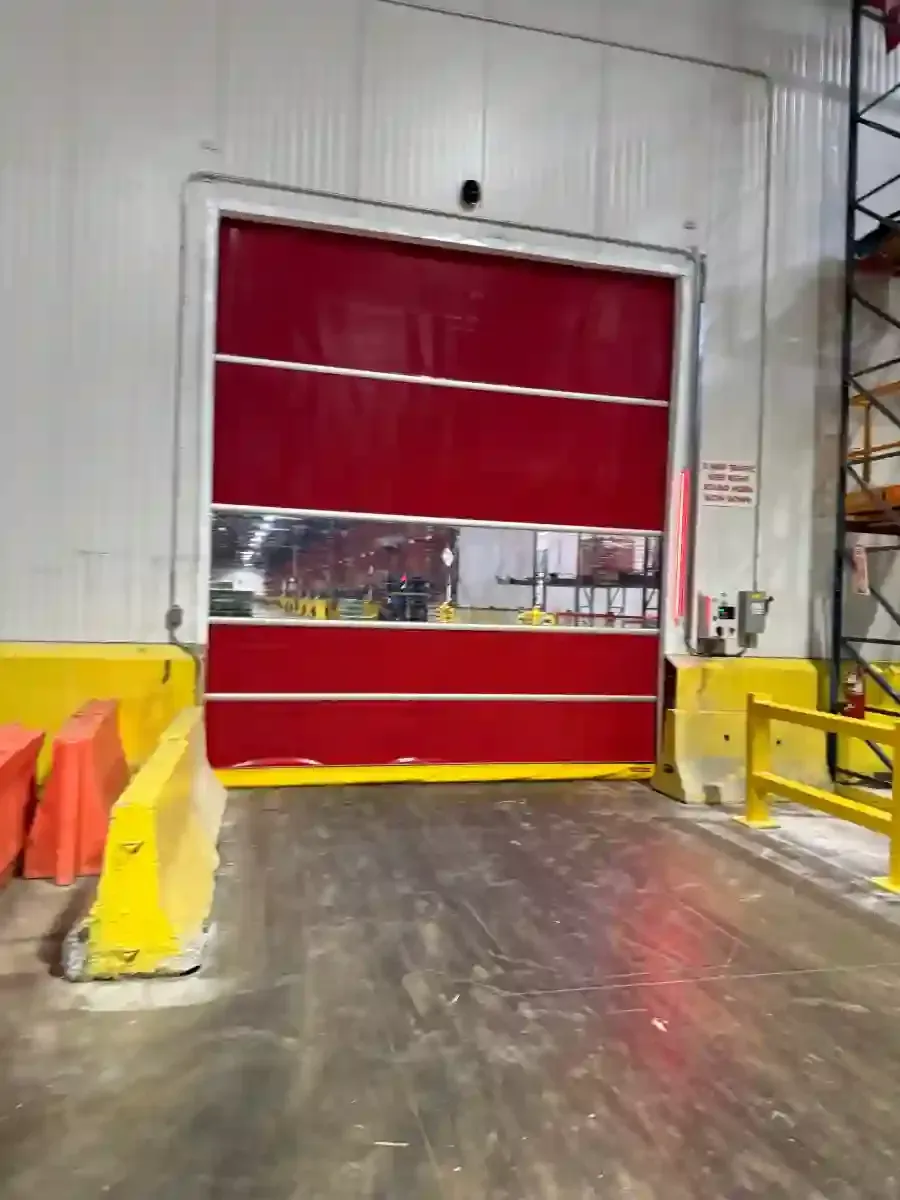
Doors Built for Thousands of Daily Cycles
High Speed Door Installation in Taunton for warehouses and food facilities requiring temperature and contamination control
Next Generation Doors & Construction installs fast-cycle industrial doors across Taunton and the South Shore, serving warehouses, food processing facilities, and distribution operations where temperature control and contamination barriers directly affect production. Your operation requires doors that cycle quickly enough to maintain controlled environments while handling forklift traffic without creating bottlenecks. South Shore warehouses and food facilities along the Route 138 industrial belt need fast-cycle doors specifically to stop heat loss during freeze-thaw season, when every open door second translates to lost energy and compromised temperature zones.
High-speed door installation involves measuring header clearance and selecting floor seals based on your door's cycle frequency and the environmental separation it needs to maintain. These two steps determine how long the door operates without failure—generalists skip precise header measurement and install universal seals that wear out under high-cycle use. Myles Standish Industrial Park tenants need doors that handle the region's seasonal temperature swings and the constant cycle demands of distribution operations.
Schedule an on-site consultation to review your facility's header clearance and cycle requirements.
What Proper High-Speed Door Installation Requires
Header clearance measurement determines whether the door coil and motor assembly fit without interfering with structural elements or overhead utilities. You need a technician who measures the actual clear opening, not just the rough opening, because a coil that binds against a beam or conduit creates motor strain that shortens door life. Floor seal selection follows your door's cycle count—high-cycle operations need reinforced seals that maintain compression after thousands of openings, not standard rubber that flattens within months.
After installation, your facility operates with doors that open and close in seconds, maintaining separation between climate zones without slowing forklift traffic. Food facilities notice immediate contamination control improvements when fast-cycle doors replace slower swing or sectional doors that stay open too long. Distribution centers see reduced heating costs during winter operations because the door closes before cold air floods the bay.
Next Generation Doors & Construction is Wayne Dalton certified and IDA certified with approximately 20 years of experience in commercial and industrial door applications. High-speed doors are a stated priority focus, not an add-on service, and 24/7 emergency service availability means a door failure mid-operation doesn't shut down your facility overnight.
What Facility Managers Usually Ask
Questions about high-speed door installation come up frequently when operations review their temperature control or contamination prevention requirements.
What makes high-speed door installation different from standard commercial door work?
High-speed doors require precise header clearance measurement and floor seal selection matched to cycle frequency—steps that determine whether the door operates for years or fails within months. Generalist contractors measure rough openings and install universal seals, which creates premature wear on high-cycle doors.
How does freeze-thaw season affect high-speed door performance in Taunton?
New England's freeze-thaw cycles stress door seals and motor components on doors cycling in unheated bays. Proper installation includes seal materials that maintain flexibility in cold temperatures and motor mounts that absorb expansion and contraction without losing alignment.
What header clearance do I need for a high-speed door installation?
Header clearance depends on door height and coil diameter—you typically need 18 to 24 inches of clear space above the opening. Your actual requirement varies based on motor placement and whether the door operates on a continuous-cycle or intermittent-use schedule.
Why does floor seal selection matter for high-speed doors?
Floor seals on high-cycle doors compress thousands of times per day, and standard rubber seals flatten within months under that load. Reinforced seals maintain their compression and environmental barrier without requiring replacement every season.
What happens if a high-speed door fails during operation?
Next Generation Doors & Construction provides 24/7 emergency service so a door failure doesn't shut down your facility overnight. Rapid response prevents lost production time when a door goes down mid-operation.
Next Generation Doors & Construction specializes in industrial and commercial door applications across the South Shore, with high-speed doors as a core service focus. Request a facility evaluation to determine header clearance and cycle requirements for your operation.